Transit California interviewed Gene Kim, senior vice president at STV, a firm specializing in public works projects across the United States.
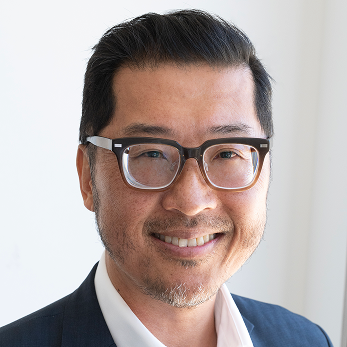
Transit California: As senior vice president at STV, you serve as area manager and lead for transportation operations in California. What are some of the biggest transportation opportunities for California right now?
There are some incredibly exciting things happening over the next couple of years related to upcoming Games. Not only is the World Cup kicking off in Inglewood, we’re about 2 years away from the 2028 Summer Games in Los Angeles. Moving millions of spectators around requires a ton of coordination between capital needs, operations, customer experience and communications. The upside of these global spectator events is that it features transit as the critical centerpiece of mobility and enables agencies to test innovation solutions like integrated mobility hubs, dedicated bus lanes, and automated shuttles as legacy investments that can outlive the Games and expand the menu of travel choices. There’s a ton to do, and I’m here for it.
Transit California: What do you see as the top challenges or obstacles California transit projects are currently facing?
I think there’s several external factors posing some serious challenges to transit agencies in California. There’s the funding uncertainty with the expiration of federal relief funds, and the tough decisions transit agencies face in balancing operations and capital needs. Not only that, rising capital costs have strained capital budgets and, in some instances, resulted in mega projects being temporarily halted or slowed down. Having said that, I do think transit agencies are being creative about looking at lower cost solutions like bus rapid transit (BRT), being very smart about maintaining core services despite the fiscal challenges, and prioritizing critical system upgrades.
Transit California: You co-founded the organization Asian American Leadership in Mobility, and you spoke about this leadership recently at the Association’s May webinar as part of AAPI Heritage month, Moving the Industry Forward: Asian American Leadership in Transportation. Can you talk about what AALM is, and why you stepped up to create it?
It’s pretty simple. AALM was created to build a support network for mobility professionals who aspire to break through as leaders in our industry. For me, I have to learn things the hard way. Early on in my career, I thought the way to advance was to work hard, be technically excellent and fit in. Like so many of my peers, I didn’t realize that this approach – the stuff our parents ingrained in us – would actually put me in a box and limit how people might see me offer greater value as a leader, not just a doer. What I needed were mentors and peers who challenged me to bet on myself, take risks and defy stereotypes about our potential as leaders. At its core, that’s what AALM is about, and it’s incredibly gratifying to see our members rally support for one another at key career moments and make a difference.
Transit California: What should the transit industry do to ensure Asian American representation in leadership roles?
Transit is a space that I love because it deeply recognizes and values inclusion, diversity and representation. I see it in the composition of the leadership at major transit agencies like Sacramento Regional Transit, SamTrans and the SFCTA. But I think there’s still a ways to go. The key is recognizing the senior management, the C-suite and executive leadership is best able to deliver an equitable, inclusive and accessible transit services when decisionmakers reflect the diversity and experiences of its transit customers. The other thing is really cool thing is just seeing bold leaders like April Chan and Tilly Chang fundamentally altering in real time how people perceive Asian Americans as leaders.
Transit California: Your strategic planning career spans decades in transportation. Can you talk about some of your experiences managing major transportation projects in California?
It’s weird to be at a stage of my career where I can see projects I help plan and design a decade or so ago get built and operated. Seeing the LAX Metro Connection project open was incredibly gratifying, having helped facilitate agreement between LAX and Metro on a Metro Rail connection at the 96th Street site. I’m also excited to see bus rapid transit (BRT) get legs around the country. I can’t wait to see the Vermont BRT open and take it to football games at the Memorial Coliseum. LA Metro is transforming LA into a transit city, and it’s incredibly gratifying to contribute to projects like the Airport Metro Connector (AMC), the Vermont BRT and the Sepulveda Transit Corridor and see how they make LA where you can get everywhere you want to go without needing a car.
Transit California: You served as Deputy Executive Officer of Mobility Corridors at LA Metro, which included some of the most congested transportation corridors in the country. How did you approach this role, and what are some of your notable accomplishments from this time?
To me, it was important to think of streets as more than just assets designed to maximize car movement. Streets are for walking, biking and taking the bus, and these modes are equally important to accommodate as cars. We need to think more holistically about the street, and best way to manage it in order to accommodate the ways people travel. It’s not easy; LA came of age in the automobile era, and it’s a part of our history and culture. But it doesn’t mean that we can’t think creatively about making great urban corridors more pedestrian friendly and transit oriented. Protecting the ability of bus to move efficiently through a congested corridor is not easy, but it’s not impossible. It’s awesome to see the pipeline of BRT project expand from time we kicked off the Countywide BRT program back in 2014.
Transit California: Do you have advice for Asian Americans starting out in the transportation or transit fields?
Find your voice and don’t be afraid to use it. Seek out a mentor and peers that can help you navigate critical career decisions. Bet on yourself. Take risks.
Transit California: How can an interested professional find out more about joining AALM?
We’re setting up a website, but find the AALM Group page on LinkedIn. We’re actively building membership, which is free, and inviting members to get involved in sponsorship drives and programming. Also, look me up. Always excited to meet you folks and talk about fun ways to grow our community.
View a recording of this month’s webinar featuring Gene Kim here. Previous 2026 webinar series recordings in partnership with COMTO for Black History Month and WTS International for Women’s History Month can be viewed here. Watch for announcements about additional educational webinars coming up later this year!