Transit California sat down with California Energy Commissioner Nancy Skinner to discuss her role’s intersection with transit.
By Arianna Smith
Managing Editor
Transit California
This interview has been edited for length and clarity.
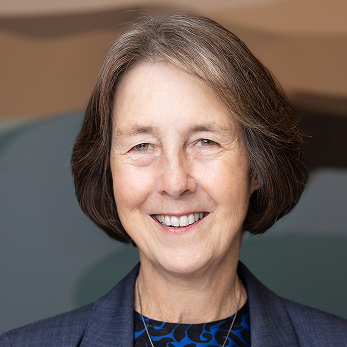
Transit California: You are in your first term as one of five Commissioners of the California Energy Commission, where you serve as the Lead Commissioner for the Clean Transportation Program. The program promotes accelerated development and deployment of zero-emission vehicles and related infrastructure with about $100 million in investments annually. What are your broad priorities for public transit in this area?
Commissioner Skinner: First, I'm really honored that Governor Newsom appointed me to the Commission. It's allowing me to continue to work on state-level policies. From my experience in the legislature, I got very invested in lots of statewide issues, and being a Budget [Committee] Chair, I got to put my hands into so many different issue areas, which I loved.
As a Commissioner, I'm really committed to supporting our public transit agencies in accelerating their transition to zero-emission vehicles in advance of the Air Resources Board’s Innovative Clean Transit Rule, which has set 2040 as a goal for 100% zero-emission transit vehicles. Now, progress has been made. So, for example, Antelope Valley Transit Authority and Santa Maria Regional Transit have reached 100% zero-emission fleets. And then there are agencies like Anaheim Transit, which are close to 80%. And I'm sure there are others that I'm not even mentioning. But over two-thirds of our transit vehicles up and down the state are still powered by diesel.
What I like to remind folks is that 82% of Californians live in communities that are the technical term “non-attainment.” What does that mean? It means 82% of Californians breathe unhealthy air on a daily basis. In the LA region alone, the breathing of that unhealthy air is estimated to cause about 1,200 preventable deaths a year.
We can do better. There are some things we can't necessarily prevent. But we have the power to clean our air. We've made progress. We could do a lot better.
LA's hosting of the 2028 Olympics gives us a good opportunity to support that acceleration. The city and the games themselves have set high goals for the games to be powered by clean, zero-emission transportation. So, the infrastructure that we invest in now to support those games will continue to make the region's air healthier for years to come and help all the transit agencies meet that goal earlier. Well after the games are over, we're going to benefit from the zero-emission transportation investments that we make now for those ‘28 games.
And our agency just recently awarded some grants. We awarded a Blueprint Implementation Grant to the organization Highland, the school bus manufacturer, a key sponsor of the [2028] Olympics. And of course we're going to help Highland have the electric charging infrastructure that 500 buses are going to need. . . . if we can support them in getting that infrastructure, then it stays in place well beyond the Games. So that's something that I'm really focused on and really looking forward to.
Transit California: The CEC administers the Charging and Hydrogen Refueling Infrastructure for Transit Buses program through the Clean Transportation Program. What are some of this program’s accomplishments, and how do you want to see it evolve?
Commissioner Skinner: The California Legislature, through the budget process, directly appropriated funds from the Greenhouse Gas Reduction Fund, specifically for electric vehicle charging and hydrogen fueling infrastructure for transit buses. We also have a broader pot of money for all medium duty heavy duty (MDHD) vehicles, which transit agencies can also compete for. When we put out many of our solicitations, we put them out just for ports, or for school buses, or for very heavy-duty vehicles, but for many of them we allow transit agencies to compete.
We also do very specific, transit-oriented [solicitations where] only transit agencies can compete. And most of those solicitations are administered through a block grant program called Energize. To date, we’ve already awarded nearly $90 million to support ZEV infrastructure, both electric vehicle charging and hydrogen fueling specifically for transit. The majority are EV charging, but over a third are hydrogen projects.
We just released a Notice of Proposed Awards (NOPA) for the SF Bay Ferry. We had originally awarded them money to develop the blueprint for how to get zero-emission ferries, and they did that, and now we've just awarded them funds. The contracts aren't fully negotiated yet, but they are awarded for the actual charging infrastructure for those ferries.
Transit California: You served in the California State Legislature, first in the State Assembly from 2008 to 2014 and later in the State Senate from 2016 to 2024, representing parts of the East Bay. How did your work representing the East Bay help inform your transit views and policy priorities?
Commissioner Skinner: I like to tell this story when I was growing up. I was born in San Francisco, but we moved right before I started kindergarten down to Southern California. And during that time, the 60s and early 70s, there was no transit in SoCal, and my mother - this is highly unusual for a Californian mother - she did not drive. My father had the car; he went to work, so growing up felt very claustrophobic. We didn’t go anywhere, because we couldn’t just get on a bus. That changed once I got to high school and I had friends who could drive. And when I moved to Berkeley to go to college, BART had started, there was AC Transit, -- all of a sudden, I could get places, I could go to Oakland, I could go to San Francisco just getting on a bus or a ferry. I used to take the ferry over to San Francisco quite a lot, and it felt so freeing. From that time, I decided I never want to live in a community where I am car-dependent. Now, I have a car, but I don't use it very much, and I just don't like to be car-dependent.
But the East Bay, especially the dense communities along the I-80 corridor, which are the communities I represented, have always had a healthy ridership on AC Transit, on BART, on some of the smaller city-specific transit like Richmond. And interestingly, Berkeley and Oakland and, of course, San Francisco are in the top 25 cities with the highest transit ridership in the US.
The pandemic really impacted our transit ridership, and it's continuing to impact it because we have a low return to the office in Oakland and San Francisco, compared to many other communities. But the other thing that's really impacted transit ridership is the rise of transportation network companies (TNCs), companies like Uber and Lyft. So their vehicle miles traveled (VMT), continues to grow, while our transit ridership is not growing the way we would hope. And many of those rides are now rides that people are using in TNCs. I bring that up because while there is legislation to help move TNCs over to zero-emission vehicles, there's not a huge success story on that yet. And it's so much easier for us to convert a limited number of transit vehicles to zero-emission. And we would just benefit overall.
Transit California: As a state legislator, you served for many years as a member of the Transportation Committee. How can current and future legislators best support public transit, particularly when it comes to the transition to clean energy?
Commissioner Skinner: I realize that the challenge to most of our transit agencies up and down the state is funding. There is some challenge in terms of capital and infrastructure funds. But a lot of the challenge is operating funds, and with fare box revenues not returning to what they were pre-pandemic, that's really difficult on the agencies. Ridership would definitely benefit, and our communities, and our air quality - everything would benefit from injections of operating funds, but we also would benefit from injections of infrastructure funds that make it easier for people to use transit.
We have more and more transit agencies where you can just whip out your credit card right at the turnstile, or right as you get on the bus. You don't have to worry about getting a special card or a special ticket, which is great. That's so convenient for so many riders. But a lot of people don't even know that option exists. I was on BART last night with some neighbors and friends, and one of the gentlemen didn't have enough money on his Clipper card, and he was getting frustrated. And then his wife said, “Just take your credit card out.” Luckily, many of our stations have that, but if that were universal, that would greatly improve ridership and help the consumer. And those are the kinds of things that potentially the Legislature could direct some funding towards.
In the clean energy transition, supporting innovative technologies like the Pantograph EV charging systems. So let's say you're a bus operator, and you have 100 electric vehicles. The Pantograph charging system uses overhead units, so an operator doesn't have to manually plug in each vehicle. And it's very impressive. There was money in the Biden bill [Infrastructure Investment and Jobs Act] for it, which Trump has cut. So it would be good if the Legislature tries to help our transit agencies that are ready to make that transition.
Transit California: In the Legislature, you successfully authored several laws that championed energy storage, climate change mitigation, and housing production. How do you see transit policy intersecting with these issues?
Commissioner Skinner: When I did my energy storage bill back in 2010, there was no utility-grade battery installation, even as we were moving toward very ambitious renewable energy goals, and I knew we were going to need it. But I hadn't really thought about [the bill’s] application for, for example, helping with EV charging. And now, a transit operator in a dense urban area, perhaps one of the places where they have their bus yard is constrained in terms of its utility infrastructure. Perhaps the distribution center right there can't quite give them the kind of power levels that they want to charge their buses. Well, battery storage will help augment that and enable them to do it, and it also enables them to manage their load, so perhaps they're charging at times when it's not as expensive. There's a lot of advantages to battery storage that, in 2010, weren't even anticipated.
And for housing production, of course, for transit: Operators need some level of density. If you have only a few people living really far from each other and they're not going to the same places, it's very hard to support transit with that type of land use pattern with that type of living situation. And we talk about suburbia a lot, but of course, there are some suburban parts of California that are getting denser, so it's really more in other parts of California where it just doesn't make as much sense. But as we increase housing, especially in our transit corridors, we are supporting transit, and we're making it very convenient for those residents to be able to get around without a car. If they can have confidence that they're not going to need a car much, then we can reduce the cost of that housing. Because adding parking to housing is phenomenally expensive. When I was still doing bills [as a state legislator], there was an estimate that was like $80,000 per parking slot. I'm sure it's higher now. When we have affordability as a crisis, we have housing shortage as a crisis, the more housing we can build, and if we can build it and know that there's reliable transit nearby, then the less parking we're going to need additionally.
Transit California: How can transit agencies best work with your office and the CEC to discuss transit issues?
Commissioner Skinner: We welcome feedback on our funding: how we do our funding solicitations, what are there aspects of its design that are difficult for the agencies, either for applying or for meeting the goals?
We're always looking for that feedback because we want to be as user-friendly as possible. We want to be able to take the funds that the Legislature has appropriated us and put them to the good purposes that the Legislature intended. And while in the design of any particular solicitation, we're doing our absolute best, we're not the ones who actually receive the money and then try to implement it, right? So that kind of feedback, we just welcome it always.