Transit California sat down with Clarissa Reyes Falcon, Chair of the California Transportation Commission.
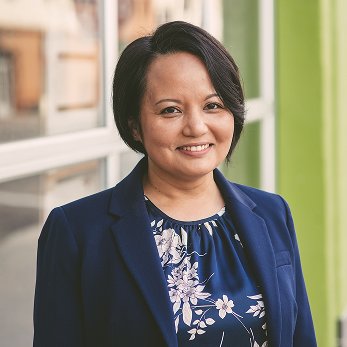
Transit California: You are the Chair of the California Transportation Commission (CTC), which is responsible for programming and fund allocation for highway, passenger rail, transit and active transportation construction and improvements. What are some critical public transit issues that Commissioners are considering currently?
First of all, thank you for the opportunity to speak with your readership directly.
The most important question I ask myself as Chair is whether Californians can actually see themselves served by the investments we make. Not in the abstract, but in their daily lives. Getting to work. Getting to a doctor's appointment. Getting their kids to school. Getting home safely. That's my frame for everything, including how I think about the critical issues before us right now.
The first is structural funding pressure. The Public Transportation Account, which funds transit and intercity rail projects, is under real strain with a 5-year shortfall of $273 million in the 2026 STIP cycle. What that means practically is that transit projects are competing for resources they were never designed to chase. And the consequence of that pressure affects riders - working families, seniors, people with disabilities, communities that have no other way to get where they need to go.
San Diego is a story I know well. MTS has recovered 95 percent of its pre-pandemic ridership, which is genuinely impressive. And yet the system faces a structural funding cliff of over $120 million annually beginning in 2029. That's a huge gap between what the system needs and what the current funding structure provides. AB 2484 is a response worth watching, which gives local voters the authority to invest in their own transit future.
The second issue is federal uncertainty. The Infrastructure Investment and Jobs Act expire September 30th and there is no reauthorization on the table. Several programs California communities have counted on have been eliminated or cut significantly. That uncertainty doesn't just affect projects; it affects the ability of regional agencies to plan with any confidence.
And the third is alignment, which for me is the most compelling. Through my career working in the Legislature, in economic development and consulting, I have been part of countless policy discussions on how transportation, housing, climate, and economic development are being discussed together as an integrated system rather than competing silos. But alignment doesn’t happen by itself. It requires intentional investment, not where the demand only exists today, but where and how communities are growing. Therefore, its connecting transportation to where people live, work and recreate.
That's the work. And despite the challenges, I find myself genuinely excited to be in this seat at this moment.
Transit California: What do you see as the greatest opportunities for public transit in the coming months and years?
The opportunities before us are real despite the challenges to the funding environment.
The first is the alignment I just described. Transportation and housing policy are moving in the same direction. SB 79, which takes effect this summer, establishes density requirements near transit stops that will fundamentally change what gets built and where. That's a structural shift in how California grows. And if the building community, transit agencies, and regional planners are intentional about it, we have an opportunity to create communities where people can actually live near where they need to go.
The second is investment. Through our funding programs such as SB 1 programs including the Solutions for Congested Corridors Program (SCCP), the Local Partnership Program (LPP), and the Active Transportation Program (ATP); the Commission is investing in the connections that make transit work. Not just the trains and buses themselves, but the bike lanes, the pedestrian paths, and the first and last mile infrastructure that determines whether someone chooses transit over a car. I was just at the SMART Rail Healdsburg groundbreaking recently and that project was funded in part through our SCCP program. That is what these investments look like on the ground. Additionally, the SB 1 programs and the Transit and Intercity Rail Capital Program (TIRCP) continue to accelerate the zero-emission fleet transition in ways that are improving both the climate and the quality of service for riders.
The third is technology as a genuine tool that can use data driven service optimization, real time passenger information, demand responsive transit in rural and underserved areas. These tools are available now and we are just beginning to understand how to put them to work for riders.
And the fourth, which is deeply personal to me, is the binational opportunity in the San Diego and Imperial County region. The Otay Mesa East Port of Entry, the Cross Border Xpress, the economic corridor between San Diego and Tijuana. These are not just local assets. They are California assets which contribute meaningfully to our robust economy. And connecting that region more effectively through transit and multimodal infrastructure is one of the most exciting developing opportunities in the state.
The thread running through all of these is the same question I started with. Are we building a system where Californians can see themselves served? Because when we get that right, then we are stewarding our system well.
Transit California: You began your service on the CTC in 2021 representing San Diego and Imperial Counties, and you have served as Vice Chair. How are these experiences informing your current role as Chair?
When I joined the Commission in 2021, I came with thirty years of experience navigating government systems, land use, and community advocacy. I thought I understood how transportation policy worked. And in many ways, I did. But sitting at the dais taught me things that no amount of consulting or advocacy work could have prepared me for.
As a Commissioner, I represent the state as a whole, but coming from San Diego and Imperial Counties gave me a border and binational perspective that is genuinely underrepresented in statewide transportation conversations. But I quickly learned that my job was not to advocate for my region. My job was to steward a system that works for all of California. Harmonizing the reality of caring deeply about where you come from while being accountable to the whole is something I’ve worked on as a Commissioner and even more significantly as Chair.
I also had to learn to trust the institution. Staff expertise at the Commission is extraordinary, and early in my tenure I had to develop the discipline of knowing when to ask hard questions and when to listen and learn. That's still how I lead. My role is to support and amplify expertise, not substitute my judgment for it.
And then there's the relationships. As Vice Chair I had the runway to build trust with commissioners, staff, and regional partners before I needed to lead. That matters more than people realize. You cannot lead an institution you haven't learned to serve first. And that approach of service first does not leave when assuming Chair.
One of the relationships I value most is the one the Commission has built with the Interagency Equity Advisory Committee. Through my years as a Commissioner, I watched that body evolve from a formal requirement into a genuine partner that provides meaningful feedback on program guidelines, project criteria, and how equity considerations are embedded into the decisions we make. That kind of structured community voice, integrated upstream into how we develop programs rather than consulted after the fact, is exactly the model I described from my consulting work but amplified. It's the difference between equity as a checkbox and equity as the work.
What I carry most from those years is something less tangible. Serving a border region gave me a deep understanding that transportation is not just an economic system or a climate system. It is a cultural system. It connects people to the places and communities that shape who they are. That perspective never leaves me.
Transit California: In the CTC’s 2025-2027 Strategic Plan, as then-Vice Chair, you joined then-Chair Darnell Grisby in writing “the future of California’s transportation system is at a crossroads.” What are some possible futures you see for the state’s transportation system?
California has a choice to make. One future is a transportation system that remains largely reactive, where we continue responding to congestion, safety challenges, climate impacts, and infrastructure needs after they become crises. The other future is one where we proactively invest in a system that is safer, more resilient, more sustainable, and more responsive to the needs of Californians.
I believe the future of transportation in California must be multimodal. Our residents need options: whether that's driving, taking transit, biking, walking, rolling, or accessing passenger rail. We also need a system that recognizes the realities of climate change and makes investments that strengthen resilience while reducing emissions.
At the same time, California's economy depends on the efficient movement of goods. We cannot choose between economic competitiveness and sustainability; we must achieve both. The future I envision is one where transportation investments improve quality of life, support economic opportunity, and connect communities that have historically been underserved.
Most importantly, I see a future where communities have a stronger voice in transportation decisions. The people who use the system every day should help shape it. When we listen early, engage meaningfully, and invest thoughtfully, we build projects that better serve Californians and earn greater public trust.
To achieve this future, the state will need to take decisive action to ensure we have sustainable funding to support out transportation infrastructure in the coming years.
Transit California: The Strategic Plan goes through 2027. What plans have you put into action, and what are you still working to implement?
The Strategic Plan was intentionally designed to move beyond a document and become a framework for how the Commission makes decisions. Since its adoption, we've continued to emphasize safety, community engagement, environmental stewardship, mobility, and partnership in our funding programs and policy discussions.
One area where we've made significant progress is elevating community voices. The Commission has continued to work closely with the Interagency Equity Advisory Committee and expand opportunities for public engagement. We have also placed greater emphasis on helping communities understand how transportation funding decisions are made and how they can participate in those discussions.
We have also continued advancing investments that improve safety across all modes of transportation, support active transportation and transit, strengthen climate resilience, and improve mobility and freight movement throughout the state.
Looking ahead, one of my priorities is continuing to strengthen public understanding of the Commission's role and the impact of transportation investments. We want Californians to see not only the projects being built, but also how those investments improve safety, expand opportunity, and support their communities. We are also continuing to deepen partnerships with local agencies, Tribal governments, community-based organizations, and other stakeholders to ensure our decisions reflect California's diverse needs.
The work outlined in the Strategic Plan is ongoing, but I am proud that the Commission has built a strong foundation and remains focused on delivering a transportation system that is safe, equitable, and multimodal for all Californians.
Transit California: In addition to serving as CTC Chair, you are the Principal Owner and Consultant of Falcon Strategies, a firm that provides government and community relations consulting to a wide range of public and private sector clients. What lessons have you taken from your client projects regarding public transit?
Thirty years of government and consulting taught me one lesson above all others. Communities rarely oppose transportation investments because they oppose transportation. They oppose them because they don't see themselves reflected in the process.
I have sat in countless community meetings where a well-designed designed project that is technically sound, financially solid, regionally important still met resistance not because people didn't want better transit or safer roads, but because they felt the decision had already been made before anyone asked them. That experience shaped how I think about community engagement as Chair. It is not a checkbox. It is the work.
Consulting also taught me that the best transportation outcomes happen when the people who build communities and the people who move communities are in the same room early including developers, transit agencies, regional planners, community organizations. When those conversations happen upstream, before plans are formed, environmental documents are filed, and funding is pursued, the results can be fundamentally different from where a project started. When they happen downstream, everyone is defending a position instead of building something together.
And working in the border region for three decades gave me something that doesn’t show up in a traffic study. Transportation infrastructure carries cultural meaning. A road, a transit line, a port of entry are not neutral objects. They define who belongs, who has access, and whose daily life the system was designed around. That understanding is something I carry into every Commission decision I make.
The throughline of all of it is the same question I keep coming back to as Chair. Are Californians seeing themselves served? Because if they aren't, it doesn't matter how well we've done everything else.
Transit California: You have served as a Commissioner on the San Diego County Commission on the Status of Women and as a Board Member to numerous environmental, economic, and community organizations. What would you tell others who are considering serving on boards and commissions?
The first thing I would say is know why you're saying yes. Board and commission service is not a credential. It is a commitment. And if you treat it like a resume line, the people you're meant to serve will feel that, and so will you.
I have served on boards where the mission lit me up and boards where I realized too late that I had said yes for the wrong reasons. Both taught me something. The ones where I was genuinely invested, where the work connected to something I actually cared about are the experiences that shaped how I serve today.
Secondly, I would say is do the homework. Show up prepared. Read the materials, understand the institution's history, know the people in the room and the communities outside of it. Nothing signals respect for the work more than preparation. And nothing erodes credibility faster than a board member who arrives empty handed and leaves the same way.
Also, be willing to be the voice that says the uncomfortable thing but from a place of good stewardship. Boards need members who can hold the tension between what's easy and what's right. That doesn't mean being combative. It means being honest with your colleagues, with staff, and with yourself about whether the institution is living up to its purpose.
Most importantly, understand that your role is to serve the institution, not the other way around. The mission is bigger than any one member especially when it exists for the greater good. When you internalize that, everything else about how you show up changes. It’s the anchor.
Service done well is one of the most meaningful things a person can do. But it requires intention, preparation, and a genuine willingness to put the work above the recognition.
Transit California: You were recognized as Woman of the Year by both the State Senate and Assembly for your expertise and commitment to serving your community, what did this recognition mean to you?
Recognition like that gives me pause. Not because I didn't work hard but because someone else saw it and decided it was worth naming publicly. That matters in meaningful ways that are validating, especially as a woman of color.
When I received those recognitions, my first thought was not about myself. It was about the women who came before me in this community who do the work without the recognition. They help build the rooms I get to walk into and I feel the weight of that lineage in a very real way.
I am also aware that the women are watching including the Filipinas in my community, the young women navigating careers in government and policy and advocacy who are trying to figure out whether there is space for them in these institutions. Recognition like this sends a signal that there is space for them. That signal matters more than the award itself.
And honestly, it also deepened my sense of responsibility. When someone like a President Pro Tem of the Senate and a State Assemblymembers, who represent their constituents and decides to put their name behind yours in that way, it raises the bar. It's not a moment to rest in but to continue to meet.
So I carry those recognitions not as achievements but as reminders of who I'm accountable to, of whose shoulders I'm standing on, and of what it means to show up fully in the work.