Transit California interviewed Bridgette Beato, Founder and CEO of the Lumenor Consulting Group and Chair of WTS International.
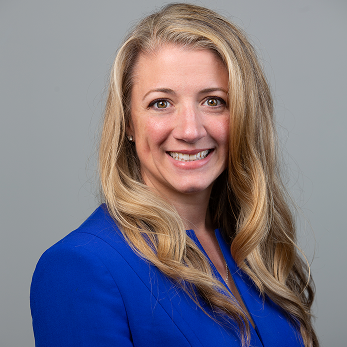
Transit California: You serve as the Chair of WTS International, where you’ve served on the Board of Directors since 2018 and served as WTS Foundation Board Treasurer from 2020 to 2022. What does this organization mean to you? Why are you so active within it?
For me, WTS has been foundational to both my personal and my professional journey.
At its core, WTS is about creating the opportunities to attract, advance and promote women in transportation. And we do it through scholarships. We do it through training and access, - access to leadership, to opportunities, to mentorship, to visibility of women in transportation. So, I’m serving on the board and now, as the Chair, that’s allowed me to shape the organization that doesn't just talk about values.
What I love about WTS is that we actively build those pathways for women to advance and to lead. It's incredibly meaningful to be part of this global community. I feel like we're changing the face of the industry in very tangible ways. We have over 10,000 members, with 72 chapters and five more in formation. We're gaining momentum at a time of tremendous change. And it shows the support that we're getting from all avenues.
Transit California: How important is it for women at all stages of their career to be involved in organizations like WTS?
It's meaningful to be involved with WTS across all stages of your career. And I know I'm a little bit biased, but we do. Right now, we have five generations represented in the workforce, and I think it means that we need to go down to six. Some of our chapters start with Girl Scout Awards and many chapters start as early as the high school with our Transportation YOU program providing access to training and, eventually, scholarships. Then we work to help support internships and bring people in through their first jobs. We really resonate with early career professionals because we help them gain confidence, exposure and a sense of belonging.
When someone comes into an industry, they need to know that they fit, that they matter. We try to be that welcoming group that says, “We want you here, and we want you to stay.” As people advance to mid-career, they're looking for sponsorship, leadership development, and peer networks that will help them to gain confidence and then move upward with their careers to senior roles.
For our more seasoned (or experienced) leaders, involvement isn't just an opportunity. I think it's a responsibility. It's to give back, to mentor and to influence the systemic change. Organizations like WTS try to create that continuity across the generations, and that's how real progress happens.
It's important to note that for WTS, it's not just about women. It's important that we have the men engaged as well. Men have been instrumental in helping us to make this change, and they're helping to create these opportunities, and they're actively working to make changes. And that's one of the reasons that we recognize and award these champions across the country [with the Honorable Ray LaHood Award].
Transit California: Our members statewide hold various roles in WTS Chapters throughout California and are frequently inviting others to become more active. Tell us about your first introduction to WTS; do you recall who got you involved?
I do. I remember where I was standing when I got the invitation. It first started out with a colleague who said, “Just come. All we ask is that you show up, have an open mind, start a conversation with somebody, and see how that goes. You'll recognize the value of this strong professional network.” What resonated with me immediately was how intentional everybody was about leadership development and peer support. I was quickly surrounded by others that welcomed me to get involved with programming and actively participating. It wasn't just about networking, which had been my assumption coming in, but a community with purpose.
It was during that first introduction that an international board member, Marcia Anderson Bomar, planted the seed that if I valued the organization as I continued, I needed to be prepared to serve. She pushed me to apply for the position on the chapter board. I said, “I'm not ready.” She “voluntold” me, “You put your name in there, and if you're willing to give it your best shot, then you're ready.” Eventually she encouraged me to apply to the International Board of Directors. A job responsibility we all have is to push each other, which I love about WTS. It's us seeing something in others that they may not see and being open and ready to push them, and it's having that openness and willingness of ourselves to go out there on a limb, maybe where we don't feel quite ready, but we're willing to lean in to all the other amazing people that make this organization what it is.
That first introduction ultimately led to years of service and leadership that I'm grateful for. Really, when I look at my time with WTS, the one word that really resonates with me is gratitude.
Transit California: You are the CEO of the Lumenor Consulting Group, which has a large transit portfolio in California, with clients including LA Metro, San Diego MTS, and the Metropolitan Transportation Commission. What are some of the challenges and opportunities you’ve experienced with California projects?
California projects are amazing. They are complex, they move fast, and they're incredibly impactful. The challenges lie in navigating the scale or the regulatory requirements or the stakeholder coordination across these large, diverse regions.
At the same time, with those challenges come tremendous opportunity that you can't find anywhere else. My perspective of California is that the agencies are leaders in innovation, whether you're talking about sustainability, equity-driven planning, or even advancing data and asset management solutions.
Working with these agencies allows you to help shape systems that influence national best practices. We are a woman-owned business that I founded almost 20 years ago and surprisingly enough, LA Metro was my very first client. They were an amazing client, and I loved working with them. It was a standout in that they were willing to make a direct award to a small business when many other agencies were not. As a woman-owned business, I found that California is a very welcoming environment. When I was new to the industry and I didn't know a lot about navigating [California’s] support system within their women-owned business and Disadvantaged Business Enterprise (DBE) program, they were foundational helping me to navigate those areas. I'm grateful to California and the support I received to effectively launch my business.
Transit California: During your career, you have led several mentorship initiatives for women in the transportation sector. What makes this work so meaningful for you? Why is mentorship so important for women in this career field?
It changes trajectories. I've seen first-hand how access to the right guidance at the right moment can unlock not just confidence, but opportunity and even leadership potential. Even having the idea to go for that LA Metro project was planted by a mentor that just said, “Go for it, what do you have to lose?”
I think for many women, especially those navigating traditionally male-dominated spaces, mentorship provides validation and clarity. Being able to support that growth, and then watching mentees become mentors themselves, is incredibly rewarding for my entire career, and for the success of my business.
It all ties back to the amazing mentors that I've had. It's really what drives me and that desire to give back. I think that's what is foundational with a lot of the WTS members and leaders.
I've had both men and women mentors. For women, we're trying to set that stage to attract people so they can see somebody that looks like them. And the men are doing a great job of saying, “I want people that don't look like me and let's create a different space. Let's put a seat at the table.”
I recommend that people pick somebody as a mentor that possesses qualities that they might admire or attributes they'd like to develop. And be sure not to limit themselves. Some of my best mentors have been men or women that had different careers.
Transit California: You served as an adjunct professor at the National Transit Institute (NTI) through Rutgers University. How do you get your students excited about transit as a career path?
I really enjoyed working with NTI, where I helped to deliver and create a couple of courses, and I've recently had the opportunity to be a guest lecturer at Villanova. That has to be some of the most rewarding aspects of my career, because I feel like it's about impact.
Transportation touches every aspect of our everyday lives. It's access to jobs, to education, to health care, to opportunity. And my mom, she grew up in a household where there was no vehicle, and so she chose her school where she could get access via transit, and her first job, and what her course of study was, came about because of those same reasons. So when people understand that their work is making a direct impact on improving communities and advancing opportunities as well as sustainability, I think they get excited.
I like to emphasize the breadth of careers that we have available in transit, from planning and engineering to technology, to data and leadership. I think those are intuitive. But we also need marketing, communications, accounting, HR -- we need people in the fields that may not be traditionally tied back to transportation.
It's a field where you can build a meaningful long-term career with very real societal impact. And I think that's what generates the excitement. There is a place for everybody here. It's just having that desire to really make an impact.
Transit California: You’ve earned several major honors as a woman leader in the transit sector, including the 2020 Railway Age Women in Rail Award and your designation as one of 100 Women of Influence in Georgia from 2019 to 2025. What does that sort of recognition mean to you as a leader in this industry?
They're very humbling. The honor of receiving award is humbling and deeply meaningful. I view myself as a servant leader, so I like to work in the background, and I like to feel like I make an impact. For me, it's a little bit uncomfortable when the awards come out, but when I receive an award, it reflects not just individual achievement. It's the collective effort of the teams, of all the mentors that I've had, of the communities that I serve, and everybody I've been fortunate to work with, because I can't go anywhere and none of us can achieve anything without the help of others.
Awards reinforce the importance of visibility, and when women are recognized, it sends a powerful message to others coming up behind us that leadership is not only possible but valued in the industry. Sometimes we need to go ahead and put ourselves out there and be a little bit uncomfortable and become champions for that change. But I'm deeply honored and I think that they're so humbling.
Transit California: The 2026 WTS International Annual Conference is coming up in Los Angeles from May 5-7. What are some highlights of the conference?
I don't know if I can say just one thing I'm looking forward to most. The 2026 conference in Los Angeles is going to be an exceptional gathering of transportation leaders from across the globe. Attendees can expect dynamic programming that will be focused on innovation, leadership development and the future of mobility along with offering an unparalleled networking opportunity. In Los Angeles, we can spotlight one of the most complex and forward-thinking transit regions in the country. It's a must-attend for everyone invested in the future of transportation, as well as for advancing women in our industry.
Our programming will open with professional development opportunities and leadership training. That’s going to be followed by three days of sessions with conversations about advancing our industry. We're also going to celebrate our scholarship and national award recipients.
We're going to honor our past by recognizing the leaders that came before us to create the opportunity to be here today. We will transition to our new Board of Directors and we're going to pass the torch to the next set of leaders. And this is our first annual conference since onboarding our new CEO Dr. Malika Reed Wilkins.
We are coming up on our 50th anniversary celebration, so as we close the conference, we are going to kick off a year of celebration for the 50th anniversary and remind everybody that this is how we got here. This is where we are.
WTS stands for Women's Transportation Seminar. Some people have said, and continue to say, that that really doesn't resonate. As we go into our 50th year, we're looking at the reminder of why we're called that. It's because back when we started, women weren't given the opportunity to go to conferences, but they were allowed to go to training. And that's where our name came from. So we're really embracing and leaning into that.
I think that California is so meaningful because right now there are so many amazing things happening in California, especially around the upcoming Olympic Games. And I am so excited to host this conference there as we bring together our industry leaders, our members and our chapters to discuss and strategize the future of our industry. It's one conference where everybody leaves feeling energized and feeling excited. We had record-breaking numbers last year in Toronto, and I'm confident that we will do so again with our incredible host city of Los Angeles.
And the amazing welcome we have been given by California, with all the outreach and welcome that we've been given from agencies across the state.
The 2026 WTS Annual Conference will be held from May 5-7, 2026 at the Westin Bonaventure in Los Angeles, California. Register for the conference here.