The Association lifted the priorities of its members this session by securing hard-won funds and successfully sending critical legislation to the Governor’s Desk.
By Arianna Smith
Managing Editor
Transit California
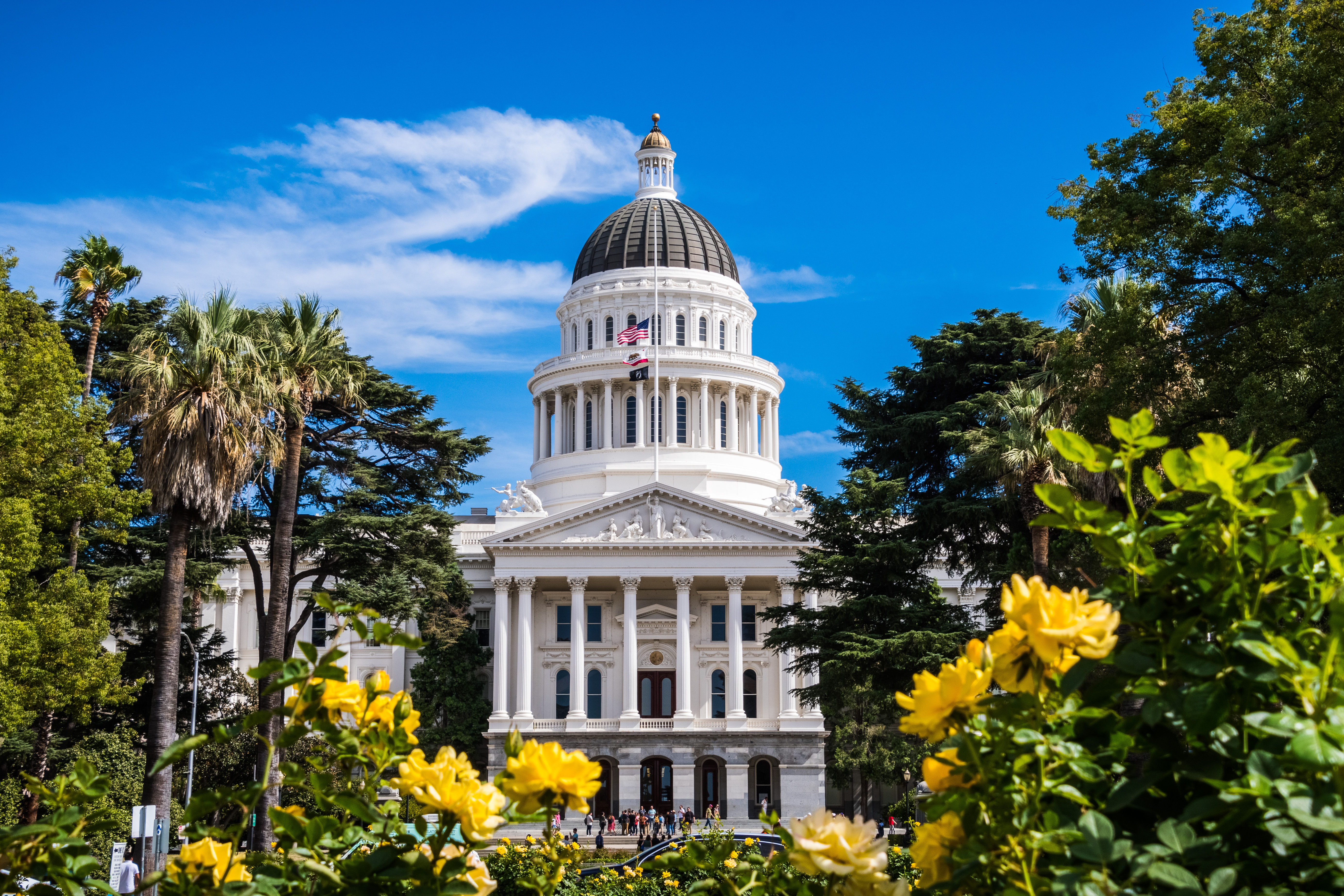
Every year the Association leads a robust legislative program, and 2026 saw continued success with that tradition.
At the end of August, after having introduced over 4,000 bills during the course of the two-year 2025-26 session, the California State Legislature concluded its regular legislative business, as well as one final special session. Governor Gavin Newsom, finishing the final months of his second term, signed 1,040 of the 1,160 bills that were ultimately sent to his desk by the deadline of September 30.
Most measures signed into law this year will go into effect beginning on January 1, 2027. Importantly, the Governor signed the Association's entire sponsored bill package. Ultimately, even while the Association was deeply involved in protecting transit funding during Cap-and-Invest and budget negotiations, advocates simultaneously worked tirelessly to advocate on transit’s behalf during policy bill discussions.
Association-sponsored bills signed into law!
Bill sponsorship goes beyond simply expressing strong support of a measure; it is a reflection of the sponsor’s expertise and commitment to the topic. In 2026, the Association’s sponsored measures began as 2026 legislative priorities considered and approved by the State Legislative Committee (now consolidated with the Federal Legislative Committee into the Legislative Committee). Association advocates recruited legislators to serve as authors for the measures and as champions of the proposed policies.
This year, the Association sponsored three technical and much-needed bills, all of which will improve service delivery to local communities that depend on transit.
AB 1837 (Mark González) Forward Facing Camera Reauthorization (Co-Sponsor): This bipartisan bill was introduced alongside Assemblymember co-authors Josh Hoover (R-Folsom), Stephanie Nguyen (D-Elk Grove), Tina McKinnor (D-Inglewood) and Senator Jesse Arreguín (D-Berkeley). Now signed into law, it will address the ongoing issue of drivers parking their cars in bus lanes, which can affect transit reliability by slowing down the process of bus passengers exiting and entering a bus; it also creates a safety issue for bus passengers who must walk or wheel across a roadway lane and may have to step over or wheel around an unsafe curb into traffic. The bill will extend the existing authorization, previously set to expire in 2027, for transit agencies to install forward-facing automated parking cameras to combat the issue of cars parked in bus lanes and help ensure transit reliability. The Association co-sponsored this bill with Association members AC Transit and LA Metro, as well as Streets for All.
AB 1944 (Lee) Zero-Emission Bus Axle Weight Limit (Sponsor): This measure helps transit agencies provide zero-emissions bus trips to the communities they serve while continuing to comply with the California Air Resources Board’s Innovative Clean Transit (ICT) regulations. Specifically, it will amend the axle weight limits that apply to zero-emission buses purchased by California transit agencies by postponing the dates by which certain axle weight limits apply. Critically, it provides for a near-term increase in axle weight limits to help facilitate this continued compliance.
SB 741 (Blakespear) LCTOP Reform (Sponsor): This bill, which was originally introduced in 2025 and amended in summer 2026 from a non-transit topic, will update and streamline the Low Carbon Transit Operations Program (LCTOP). The LCTOP receives funding through the Greenhouse Gas Reduction Fund and directs millions of dollars annually to transit agencies around the state on a formula basis. Unfortunately, various LCTOP requirements have proven to be duplicative and burdensome. SB 741 would simplify Caltrans' administrative role, expand eligible uses of funds to include the maintenance of existing transit service, and make clear that agencies can fund previously approved services without having to restart the application process.
Two of the bills that the Association opposed were vetoed, and three were signed into law. One will go before the voters as a ballot proposition in November.
Final Funding Updates of 2027
The Greenhouse Gas Reduction Fund (GGRF), which has been a centerpiece of the state’s climate strategy since 2015, provides critical funding to a range of programs that are intended to contribute to the state meeting its greenhouse gas emission reduction targets and improving local air quality. These programs include the Affordable Housing and Sustainable Communities Program (AHSC), which funds affordable transit-oriented housing; the Transit and Intercity Rail Capital Program (TIRCP), which funds major transit projects and zero-emission vehicle deployments; the Low Carbon Transit Operations Program (LCTOP), which funds transit service and fare free and discounted transit passes; and AB 617, which funds community-led air quality initiatives in California’s disadvantaged communities.
Despite these programs’ track record of success and action by Governor Newsom and the Legislature to reauthorize them through 2045, amendments proposed by the California Air Resources Board (CARB) and approved on May 29 despite heavy opposition threatened their future.
Despite the actions taken by CARB over the proposed amendments, Association staff and legislative leadership continued discussions surrounding the fate of GGRF through the summer. Ultimately, the discussions produced results in the form of two budget bills passed in September that improved the transit funding outlook for 2027.
In the final hours of the legislative session, the Legislature passed AB 113 (Gabriel), Budget Bill Jr., which makes a large number of appropriations in the FY 2026-27 state budget. The Governor signed the bill in September. Most relevantly to transit, the bill will appropriate millions in funding that honor commitments and are above July projections including $230 million for the Zero-Emission Transit Capital Program, (fully honoring the state's commitment made in SB 125 for this fiscal year); assuming higher funding for FY 2026-27 for the Transit and Intercity Rail Capital Program of $95 million (up from the $76 million projection); assuming higher funding for FY 2026-27 for the Low Carbon Transit Operations Program of $48 million (up from the $38 million projection). While AB 113 does not provide additional, supplemental investments for the TIRCP or LCTOP, the increased funding levels reflect stronger than anticipated revenue intake at the summer quarterly Cap-and-Invest auction.
The budget package also authorized up to $590 million in TIRCP loans to the Metropolitan Transportation Commission (MTC) to provide temporary assistance to BART, SFMTA, Caltrain, and AC Transit and help avoid cuts to service in FY 2026-27. The loans will use TIRCP funds already appropriated for specific capital projects and will be repaid over a 12-year term. For a full explanation, see The Legislative Analyst's Office (LAO) annual summary of the enacted 2026-27 California transportation budget.
The Transportation Budget Trailer Bill, SB 169 (Committee on Budget and Fiscal Review) implements transportation policy provisions related to the final 2026-27 budget. SB 169 extends by one year COVID-era statutory relief for transit agencies, including relief from the farebox recovery requirements (to receive a full share of Transportation Development Act Local Transportation Funds revenues) and from the requirement that agencies hold operating cost per revenue vehicle constant year-over-year (in order to apply State Transit Assistance funds fully toward operations). These relief measures were set to expire on June 30, at the end of the 2025-26 fiscal year. The Association advocated for this extension.
What’s Next?
The California Legislature is in recess through December 2026. All Assemblymembers and half the State Senators will learn whether they will return to the Capitol for another term during the statewide midterm election on November 3, although some legislators will officially term out of office on November 30. Newly elected lawmakers will arrive at the Capitol on December 7 to get sworn in to office, convene the 2027-28 session, and have the opportunity to introduce new legislation; then they will then return to their districts until January 2027. Inauguration day, when the new Governor gets sworn into office, will take place on January 4, 2027, and the Governor will introduce his proposed budget just days later. Legislators will have the opportunity to introduce entirely new legislation as early as December 7 and as late as the end of February 2027.